
When people look for mental health support, it often comes from a place of exhaustion. They are tired of not sleeping well, tired of feeling on edge, or tired of carrying something that has been weighing on them for a long time. Wanting relief quickly is completely understandable.

BUT…there are no quick fixes in mental health. Recovery is not something that happens after a few sessions or within a set number of days. It is a journey, and for most people it’s going to be a long one.

In the early stages of treatment, the focus is often on stabilisation, awareness, and safety. For some people, this can feel slow or even uncomfortable. Increased insight can sometimes highlight how much has been going on beneath the surface rather than immediately making everything feel better. This does not mean the work is failing. It means the journey has begun.

Mental health support works best when it is approached as an ongoing commitment rather than a short-term solution. Progress is rarely a straight line. There may be periods where improvement feels minimal, followed by moments where things begin to shift more noticeably. If someone enters treatment hoping for quick results or noticeable change within days, it is important to understand that this is not how mental health treatment works.

This work needs to be treated as a process that develops over time. Like any journey, it requires patience, consistency, and a willingness to stay engaged even when change is not immediate. It is often described as a marathon rather than a sprint for good reason.

Neurotherapy treatments are not designed to create instant relief. They are intended to support sustainable change that can be carried forward long after treatment ends.

For some people, discovering that there are no quick fixes can be frustrating. For others, it can be a relief. It removes the pressure to feel better immediately and allows space for genuine progress to develop at its own pace.

If you are considering treatment, it is worth reflecting on whether you are ready to commit to the journey. Meaningful change is possible, but it cannot be rushed. Taking the time to do the work properly is often what leads to the most lasting outcomes.

If you have questions about Neurotherapy treatment, brain mapping, or whether this approach may be suitable for you or your child, the team at NCAU can help. Getting the right information at the start can make it easier to understand what treatment involves, what to expect, and whether it feels like the right next step.

Reaching out for support is often the first part of the journey, and NCAU welcomes enquiries from anyone wanting to learn more before moving forward.
On the Hard Yards podcast, our founder Lara Schultz returned to unpack another live brain mapping session, this time diving deeper into what brain data can reveal about ADHD, sleep, focus and overall brain function. 

Using QEEG brain mapping, Lara walked the hosts through how different brain wave patterns can point to things like poor sleep quality, hypervigilance, low voltage brain activity and signs that often line up with ADHD. The episode also explored how early life stress and birth trauma can shape brain development, and why some challenges can be misunderstood if you only look at symptoms on the surface. 

One of the most interesting parts of the conversation came as Lara explained how brain mapping can show far more than just attention issues. From auditory processing and cognitive responses to burnout and nervous system overload, the discussion gave listeners a real look at how the brain adapts over time, and why two people with similar behaviours may have very different underlying patterns. 

The episode also touched on neurostimulation and how tailored treatment can support better sleep, improved focus, emotional regulation and more efficient brain function. For anyone curious about ADHD, brain based therapy, or the science behind how the brain responds to stress and trauma, this one is packed with insight. 

👉 Tune in to the full episode of the Hard Yards podcast (Available on Spotify or YouTube) to hear Lara break down the brain mapping process and what it revealed in real time.

To stay updated on the latest podcasts with Lara, check out our podcast page.

We’re pleased to share that we’re opening a new clinic in Perth on 2 February 2026. Our new location will be:

Ground Floor, Shop 2
1260 Hay St
West Perth WA 6005

📞 Enquiries & Early Bookings

If you’d like to book for February or register your interest now, contact us via phone or the website and ask about “Perth 2026.” Our team will help you lock in a session.

✅ What this means for you

By opening in Perth, we’re making it easier for people to access personalised Neurotherapy care close to home, with the same approach and service quality offered at our established clinics.

We’re looking forward to supporting clients across WA with personalised neurotherapy care.

For updates as we move closer to opening, follow us on:

Facebook
Instagram

We’re thrilled to share that Neurotherapy Clinics Australia is expanding to Victoria. Our new Melbourne clinic is set to open on 19 January 2026 at 386-388 Malvern Road, Prahran, Melbourne.

Our Melbourne clinic will offer the same science-based Neurotherapy services we provide across our existing locations, supporting clients with neurological, developmental and mental-health related concerns.

📆 Bookings are now open

You can now book for the third week of January. If you’d like to reserve a session ahead of opening, just get in touch via phone or our contact form and reference “Melbourne Opening.” Our team will help you secure your spot.

🔔 Stay tuned

We’ll add our opening-week timetable and booking links here on our website and across our socials soon. Follow us or check back soon to keep up to date.

We can’t wait to welcome you in Melbourne and help you start your brain-training journey.

Exciting news for Perth locals! Neurotherapy Clinics Australia (NCAU) will be hosting a special pop-up clinic in Perth from October 6th through to October 31st. This is a limited-time opportunity for anyone interested in experiencing neurotherapy sessions without needing to travel interstate.

The clinic will be open for just under a month, giving new and returning clients the chance to book appointments and explore the benefits of brain mapping and Neurostimulation in a convenient setting. With spaces already filling up, NCAU has now started taking bookings ahead of the opening date.

If you’ve been curious about neurotherapy, or you’ve been waiting for a Perth-based option, this is your chance to secure a spot while the team is in town.

📅 Dates: October 6th – October 31st
📍 Location: West Perth Healthcare Center https://maps.app.goo.gl/yJKadBKMbt4nFrLYA?g_st=ipc
☎️ Bookings: Contact Lara Schulz at +61 418 216 077,  email info@ncau.com.au or our contact form here.

Don’t miss out, as appointments are limited, and bookings are now open.

On the Hard Yards podcast, our founder Lara Schultz put host Cameron Branch through a brain mapping session — live on air.

Listeners got a rare front-row seat as Branchy tried everything from eyes-open and eyes-closed mapping to cognitive and auditory tasks, with Lara explaining in real time what his brain waves revealed. Patterns of stress, focus, memory and sleep quality were all visible in the data, giving Branchy insights most people never get to experience.

Normally a full brain mapping in clinic takes several hours, but this podcast episode condensed the highlights into something both educational and entertaining. Lara broke down what different brain rhythms mean, how trauma can show up in activity, and how tailored neurotherapy protocols are designed to help people with challenges like autism, ADHD, PTSD, dementia and Alzheimer’s.

Branchy volunteered as the guinea pig, and the results were fascinating. From hidden stress markers to unexpected strengths. For anyone curious about how the brain actually works and how neurostimulation can reshape lives, this live mapping session makes for a must-listen.

👉 Tune in to the full episode of the Hard Yards podcast now and hear the live brain mapping unfold.

When parents first hear that their child may be on the autism spectrum, it can raise more questions than answers. What kind of support is available? Which therapies actually help? And how can you give your child the best chance to thrive? As a starting point, taking the time to learn about autism therapy for children is an important step toward finding the right support.

Why Therapy Early on is so Important

Early intervention is widely recognised as one of the most effective ways to support children with autism. Therapy introduced in the preschool or primary school years can improve communication, boost confidence, and reduce difficulties in everyday routines. Even small signs, like challenges with eye contact, language delays, or a strong reliance on routines can be worth exploring with a professional.

Common Types of Therapies Families May Encounter

You’ll usually come across a range of therapy styles, each with a different focus:

  • Speech therapy, which is designed to help children develop language, conversation, and non-verbal skills.
  • Occupational therapy, which supports sensory needs, improves motor skills, and makes everyday routines much easier to manage.
  • Behavioural therapy, that helps children form positive habits and come up with strategies to reduce frustrations.

These are familiar forms of support, and many families can find them very helpful. But autism therapy doesn’t stop there. At NCAU, we focus is on moving beyond surface behaviours and look at addressing the neurological patterns that influence how a child learns and interacts.

Our Neuroscientific Approach

What makes NCAU’s autism therapy unique is its foundation in neuroscience. By using advanced brain mapping, we can see how a child’s brain processes information and identify the areas where extra support may help. This then opens the door to more personalised treatment plans that go deeper than generalised therapy methods.

If you can target the neurological root causes of communication, social, or behavioural challenges, this approach gives children a stronger foundation for long-term growth. For parents, it means knowing therapy is designed around their child’s unique brain activity, not just outward symptoms.

Support at Home and in School

For therapy to be most effective, it’s very important that support is provided at home and at school. Parents and teachers can help reinforce progress by encouraging flexibility in a child’s routines, practising social turn-taking, and providing calming strategies for sensory sensitivities.

If everyone can work together as a team (therapists, families, and educators) children feel supported and secure, which can lead to better progress.

Positive Change

Autism therapy is designed to create a positive change and help children build the skills they need to live confidently and happily. If they are given the right guidance, children with autism can develop much stronger communication skills, form friendships, and enjoy independence in their own personal way.

For families looking to explore tailored support you can look at our autism therapy designed specifically for children and find out about our research-backed, neuroscience-led approach which is designed to help children reach their full potential.

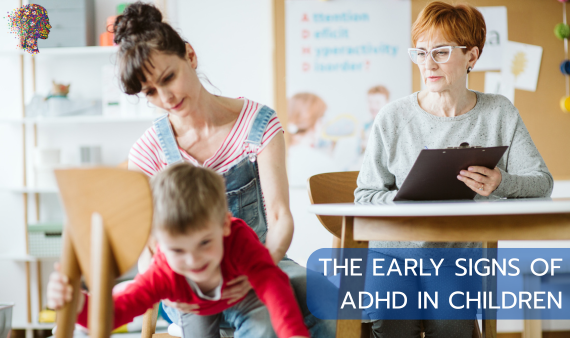
Attention Deficit Hyperactivity Disorder, or ADHD, affects around one in 20 Australians. If you don’t know much about it, you may think it affects school-aged children, but many signs begin much earlier. If you can spot these early behaviour traits it can make a real difference to how a child experiences learning, relationships, and confidence as they grow. Early support can help reduce frustration for both children and parents, and it can open up access to strategies that work.

ADHD is a neurodevelopmental condition that involves patterns of inattention, impulsivity, and hyperactivity. It’s important to note that it isn’t caused by bad parenting or poor discipline. Instead, it reflects how a child’s brain processes information, focuses attention, and regulates actions. Although each child is different, there are some shared traits that parents, carers and educators can look out for.

Common Signs of Inattention

One of the early signs of ADHD is difficulty staying focused. A child might:

  • Seem easily distracted or daydream often
  • Lose items like pencils or toys frequently
  • Have trouble following instructions
  • Avoid tasks that need concentration, such as drawing or puzzles

This behaviour is not laziness. According to Better Health Victoria, behaviour like this tends to appear in multiple settings, such as at home and in childcare, and they often continue over several months.

Signs of Hyperactivity & Impulsivity-2 

Children with ADHD may struggle to stay still, wait their turn, or think before acting. Some behaviours to look for include:

  • Constant fidgeting or moving, even when expected to sit quietly
  • Running or climbing in inappropriate places
  • Talking excessively or interrupting others
  • Blurting out answers or making snap decisions without thinking

These behaviours are often more noticeable in group environments such as classrooms, where sitting still and following routines are part of the daily structure. As Healthdirect Australia explains, it is the pattern and persistence of these signs that matter, rather than a one-off bad day.

How These Signs Show up Day to Day

Early signs of ADHD can include frequently forgetting simple instructions, rushing through activities, or struggling to stay focused during everyday routines like mealtimes or bedtime. Some children may also interrupt conversations or find it hard to play cooperatively with others. According to the Royal Children’s Hospital Melbourne, this type of behaviour can affect friendships, learning, and the family dynamic if left unaddressed.

When to Consider Further Steps

Of course, not every busy or forgetful child has ADHD, but if behaviours have lasted for at least six months, are not typical for their age group, and are causing disruptions at home, school, or play, it might be time to speak to a health professional. In Australia, GPs are often the first step. They may refer you to a paediatrician or psychologist for further assessment.

Why Early Recognition is Important

Getting support early helps reduce emotional stress, improves academic and social development, and helps children better understand themselves. It also gives families the chance to explore a wider range of tools such as behavioural strategies, school support, and therapeutic interventions. Taking early steps often leads to better outcomes for attention, learning, and wellbeing.

Support Beyond Diagnosis

At NCAU, we focus on brain-based therapies tailored for each child’s unique profile. Using tools like brain mapping and neuromodulation, we help children build better focus, regulate behaviour, and reduce anxiety without relying only on medication. If you’d like to learn more about how we support families through ADHD and attention issues, you can explore our ADHD treatment for children page.

If you’re noticing persistent signs of inattention, impulsivity, or hyperactivity in your child, you’re not alone. With the right support, children with ADHD can thrive in their own way at home, in the classroom, and as they grow.